

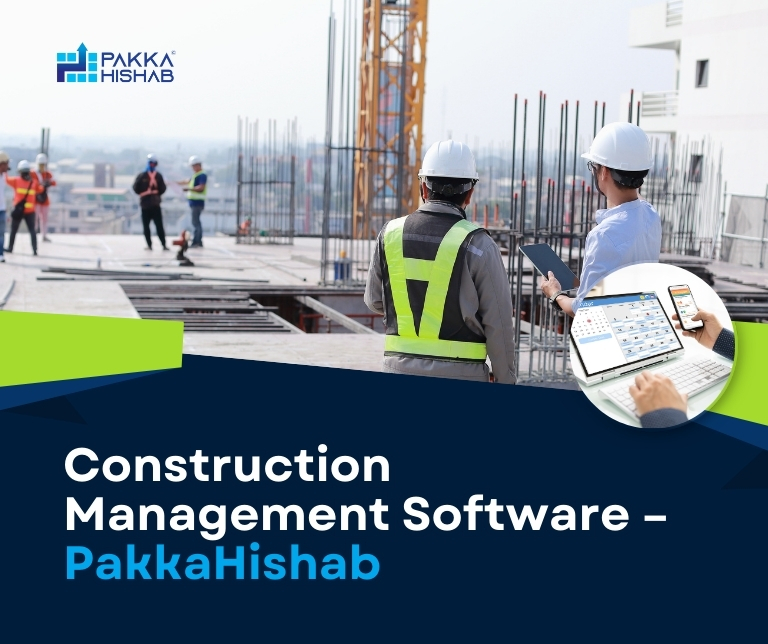
If you walk through the busy roads of Dhaka, the majestic skyline of Chattogram, or the vibrant neighbourhoods of Sylhet, one thing is obvious: Bangladesh is growing at a rapid pace. Our country is changing before our eyes, with high-rises and commercial hubs popping up where ponds and tin-shed houses once stood. But if you sit down for a cup of tea with a local developer, contractor, or site engineer, they’ll tell you something you can’t see from the outside: completing a project on time and under budget is getting increasingly difficult.
The complexity of modern building—from RAJUK compliance to the skyrocketing cost of raw materials—means the old ways of working are no longer enough. In 2026, the secret to surviving and prospering in this industry is adopting dedicated construction management software. But here is the catch: you cannot just pick fancy software from America or Europe and expect it to work on a site in Gazipur or Narayanganj. You need a solution that understands the unique, often chaotic, and deeply personal way we build in Bangladesh.
Why Builders Are Struggling
Most builders in our country remain locked in the past. They keep track of their daily tasks using outdated paper notebooks, loose diary pages, and thousands of unorganized WhatsApp messages. Does this sound familiar? This manual manner of working is the fundamental cause of the most serious problems in our sector. Materials are “lost,” money leaks through the seams, and a two-year project ends up taking four.
When you rely on a handwritten “Khatabook,” you are essentially flying a plane blindfolded. You don’t know your exact stock levels until the mason screams that the sand is finished. You don’t know your exact expenses until the bank account hits zero. This is why local construction management software is no longer a luxury—it’s a survival kit.
The “Material Leakage” Problem
On a local level, cement bags and steel rods are as valuable as cash. If you don’t keep a close eye on them, they will “disappear.” Without a good inventory tracking system, it is practically impossible to determine whether the 500 bags of cement you paid for were used in the roof casting or sold off the back of a truck at night. In Bangladesh, “leakage” is more than just a mistake; it is a constant loss of your earnings. By using construction management software like PakkaHishab, you see its features; every single bag of cement is accounted for from the moment it enters the gate.
Managing the “Thekedar” (Subcontractors)
In Bangladesh, we do not often personally recruit every laborer. We depend on Thekedars (subcontractors) for everything from tiling and painting to plumbing. These partners are always asking for “advance money” to pay their employees. If you keep track of these advances in a dusty register, you’re asking for trouble. Tracking exactly how much you gave and how much work they performed is a major headache that frequently results in angry confrontations at the end of the month.
The Rollercoaster of Daily Price Changes
The price of rods, cement, and bricks in Bangladesh can change in the blink of an eye. Global supply chain shifts or local policy changes can send your budget into a tailspin. If you aren’t tracking your costs daily with a reliable construction management software, you might finish a project only to realize you didn’t make a profit—you actually lost money because the material costs outpaced your initial estimates.

Why Global Software Often Fails in Bangladesh
Many big development firms in Dhaka have tried using famous international software. Usually, these projects end in frustration for three main reasons:
- Too Complex for the Field: These tools are built for engineers sitting in air-conditioned offices with high-speed fiber internet. They aren’t designed for a site supervisor standing in the dust and heat of a site in Badda, trying to log data on a budget smartphone with a patchy 4G connection.
- The Dollar Trap: Most foreign subscriptions are billed in US Dollars. As the Taka fluctuates, the software becomes more expensive every single month, making it a high-risk overhead for a local business.
- No Local Support: If the software glitches, you can’t exactly call a support desk in California and expect them to understand why your “Voucher” isn’t balancing. You need someone in Dhaka who can sit with your team and solve the problem in person.
Meet PakkaHishab: The Solution Built for “Desi” Construction (mockup of a smartphone held by a hand in a construction vest, showing the PakkaHishab dashboard)
This is exactly why PakkaHishab has become the go-to construction management software in Bangladesh. It wasn’t built in a Silicon Valley lab; it was built by people who understand how a Bangladeshi construction site actually breathes.
PakkaHishab acts like your digital partner. It takes all that scattered information—the receipts, the site photos, and the labor attendance—and puts it into one secure, easy-to-read dashboard. Whether you are building a single duplex or a 20-story apartment complex, this construction management software adapts to your scale.
How PakkaHishab Simplifies Your Life:
- Project-Wise Accounts: Ever mixed up the budget for “Project A” with the expenses of “Project B”? With PakkaHishab, every project is its own financial unit. You see the health of each building separately.
- Contractor Billing: It automatically tracks every taka given to your thekedar. When it’s time for the final bill, the system automatically subtracts the advances. No more disputes.
- Stock Alerts: No more work stoppages because you ran out of sand. The app warns you when stocks are low so you can order in advance.
There are some key differences between a manual system and the software system.
| Manual System | Software System |
| Paper notebooks | Digital reports |
| Material theft risk | Inventory tracking |
| Delayed payment tracking | Automated billing |
| Limited visibility | Real-time dashboard |
What Makes a System Truly “Suitable” for Our Market?
If you are shopping for a system, don’t get distracted by “fancy” features you’ll never use. Focus on these five essentials that define a top-tier construction management software:
I. Simple Material Tracking (Mal-Samana)
The software must track exactly what enters the gate and what leaves the store. In PakkaHishab, the storekeeper simply enters the “Gate Entry.” If 10 bags are used for a column, it’s logged instantly. You get a real-time list of every rod and brick on your site. This is what we call a “Pakka” inventory.
II. Daily Progress Reports (DPR)
You shouldn’t have to fight Dhaka traffic every day just to see if the 3rd-floor slab was poured. A good system lets your site engineer snap a photo and upload a brief report. You see the progress from your home or office, ensuring project planning stays on track. Transparency is the best medicine for delays.
III. Petty Cash Tracking
Small costs—tea for the workers, a box of nails, a quick transport fare—add up to lakhs of Taka over a long project. PakkaHishab lets site managers record these “small” costs the moment they happen. No more lost receipts or “ghost” expenses at the end of the month. This level of business accounting software integration is vital for small firms.
IV. Mobile-Friendly Design
In Bangladesh, the phone is the computer. The software must be an app that is easy to navigate with one hand. It needs to work even when the internet is slow, syncing data whenever a connection is found. Our field staff are comfortable with social media; our construction management software should be just as intuitive.
V. Local Support and Language
Having an office in Dhaka matters. If your staff is confused, they need to talk to someone in Bengali who can guide them. This local touch is why builders trust PakkaHishab over foreign alternatives. We speak your language—literally and professionally.
Is Software an Expense or a Shield for Your Profit?
A lot of builders tell me, “I already have an accountant, why do I need an app?”
Think about it this way: If a single truck of steel rods is “misplaced” because your tracking was weak, you lose 2 to 3 lakh Taka in one night. The cost of a construction management software subscription is a tiny fraction of that loss. When you use a system, you aren’t just “buying software”—you are buying an insurance policy against theft and waste.
When workers and storekeepers know that every single bag of cement is being monitored in a digital inventory tracking system, the temptation to “leak” materials disappears. Accountability is the best deterrent.
How PakkaHishab Handles Your Inventory (Step-by-Step)
Inventory management is the heartbeat of construction. If the heart stops, the project dies. We’ve made it a simple 3-step process in our construction management software:
- Requisition: The site engineer notices they are running low on bricks. They send a digital request through the app.
- Purchase: The head office reviews the request against the budget. They can compare vendor prices within the app and hit “Approve.”
- Gate Entry: The truck arrives. The storekeeper verifies the count on their phone. Now, the materials “live” in the system. No one can claim they “didn’t receive it” later.
This workflow is the backbone of a solid ERP for small businesses in the construction sector. You can learn more about how we handle Inventory Management to keep your site running smoothly.
Managing Labor and Thekedars Without the Stress
Labor disputes are the most common reason for project delays in Bangladesh. A contractor might claim, “Boss, you still owe me 5 lakh,” while your handwritten notes say it’s only 2 lakh. Who is right? By moving to a digital construction management software, you create a “Single Source of Truth.”
- It tracks worker attendance daily.
- It records exactly how many square feet of plastering or tiling was completed.
- It generates a professional statement that you can show the contractor.
This changes the relationship from “argumentative” to “professional.” When the data is clear, the work moves faster.
Strategic Project Planning: Looking Ahead
A building isn’t just bricks; it’s a timeline. In our country, weather (especially the monsoon) and unexpected holidays can throw a wrench in your plans. Using a tool for project planning allows you to adjust your schedules in real-time. If the rain stops work for three days, you can instantly see how that affects your completion date and adjust your material orders accordingly. This foresight prevents the “emergency buying” that eats into your profits.
Common Myths About Technology in Bangladesh Construction
Let’s clear the air on a few things we hear often:
- Myth: “My site staff aren’t educated enough for apps.”
Truth: Do your supervisors use Facebook, IMO, or YouTube? If they can send a voice message on WhatsApp, they can use our construction management software. We designed it to be that simple.
- Myth: “It’s only for the big developers in Gulshan.”
Truth: Big companies have money to waste. Small builders do not. A small builder needs business accounting software more than anyone else to ensure they don’t lose their hard-earned capital.
- Myth: “Paper is safer.”
Truth: Paper gets wet, it gets lost, and it can be “corrected” with an eraser. Digital records are stored in the “Cloud,” meaning even if you drop your phone in a puddle, your data is safe and unchangeable.
Why Modern Landowners Prefer “Digital” Builders
Landowners in Bangladesh are becoming very savvy. If they are going to trust a developer with their ancestral land, they want to know the developer is organized. When you can show a landowner a professional report from your construction management software, it builds immediate trust.
It shows that you aren’t a “back-pocket” builder, but a modern professional who uses data to ensure their building is built to the highest standard. This trust is what helps you win the next big joint-venture deal. In a crowded market, professionalism is your biggest competitive advantage.
Quality Control :
If the cement-to-sand ratio is wrong, the building is weak. PakkaHishab helps you monitor material consumption versus the estimated requirement. If you notice that the 4th-floor slab used significantly less cement than the 3rd-floor, you can immediately ask “Why?”
This helps you catch quality issues or theft before they become structural dangers. A building is only as good as the materials inside it, and our construction management software ensures those materials actually make it into the concrete.
Preparing for the 2026 Construction Landscape
The industry is changing. RAJUK rules are getting tighter, and competition is fierce. You cannot run a 2026 business with a 1990s mindset. By adopting a tool like PakkaHishab, you are moving from “guesswork” to “Pakka” (solid) facts. Whether it is managing your inventory tracking system or handling complex project planning, digitalization is the path forward.
Conclusion: The Path to a “Pakka” Future
Managing a construction site in Bangladesh is never going to be easy, but it doesn’t have to be a nightmare. The difference between the builders who grow and those who struggle is the tools they use. When choosing construction management software, remember the “BD Essentials”:
- Is it easy for local staff to use?
- Does it track material “leakage” effectively?
- Is there a local team to support me?
PakkaHishab was built to check all those boxes. It’s time to stop the waste, end the arguments with contractors, and start building with total transparency.
Are you ready to build smarter? Don’t wait for the next “missing” truck of rods to make a change. Contact us today to request your free demo and see how easy it is to manage your entire project from the palm of your hand. Let’s build a stronger Bangladesh together, one digital entry at a time!
Construction Management Software: (FAQ)
1. Is the app too hard for my site staff? If you use WhatsApp or Facebook, you can use PakkaHishab. It’s built for “Desi” sites with simple budget phones with patchy internet. We also provide hands-on training for your team.
2. How does this device stop material theft? It creates a digital trail for every bag of cement and rod. When staff know everything is tracked in real-time in an inventory tracking system, “leakage” and “missing” materials stop immediately because accountability is visible.
3. Can it handle subcontractor advances? Yes. It automatically records every Taka given and square foot completed. When it’s time for the final bill, the app does the maths, ending month-end arguments and ensuring fair payment for work done.
4. Why not use a famous international software? Global apps are built for US dollars and high-speed internet. PakkaHishab is built specifically for local Bangladeshi conditions, low bandwidth, local procurement habits, and Taka-based accounting. Plus, we have a local team in Dhaka to help you in person.
5. Does it work as business accounting software? Absolutely. It tracks your project cash flow, expenses, and petty cash, providing a clear financial picture without needing a separate, complicated accounting tool.